











Is Fall Window Replacement Worth It in Southern California? 2026 Cost, Benefits & Verdict
Yes, replacing windows in Southern California is usually worth it, and fall (September–November) is one of the best times for most homeowners to install. Fall offers mild temperatures, more contractor availability than summer, and time to finish before the winter rains. The right timing still depends on your budget, urgency, and whether you care more about cost or speed. Below, we break down what's included in a typical project, how pricing tends to shift by season, and how to decide if this fall is right for your home.
What You Get With Window Replacement: Inclusions vs. Extras
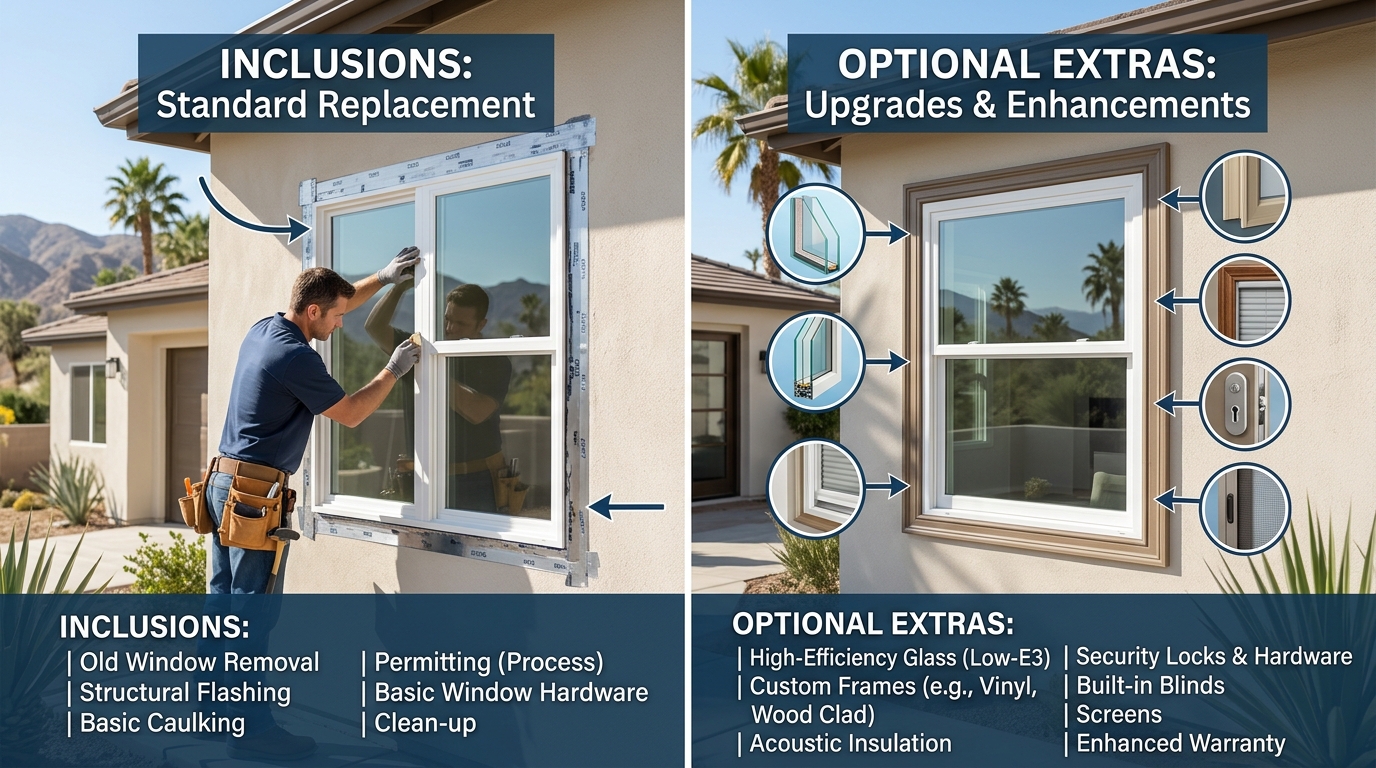
Knowing what's in a quote helps set realistic expectations before you sign with a window installation company. Most quotes list a base price per window, but the final invoice often includes add-ons homeowners don't expect.
Standard Inclusions
- Window unit and frame: dual-pane (double-pane) vinyl windows in standard sizes
- Basic installation labor: removal of old windows and installation of new units
- Standard caulking and sealing around the window perimeter
- Manufacturer warranty (terms vary by brand; many vinyl windows carry a limited lifetime warranty)
- Basic cleanup and debris removal
Common Extras (Not Always Included)
- Custom sizes or shapes beyond standard dimensions
- Building permits (most California cities require a permit for window replacement)
- HOA approval paperwork, if applicable
- Upgraded glass packages (extra Low-E coatings, argon fill)
- Interior/exterior trim work and paint touch-ups
- Rush scheduling fees during peak season
California's Title 24 Energy Code applies to most residential window replacements and affects both product choice and paperwork. Under the 2025 Energy Code, in effect since January 1, 2026, replacement windows in most Southern California climate zones must have a maximum U-factor of 0.30 and a maximum SHGC of 0.23, and some inland zones are stricter. Your contractor should handle the compliance forms with the permit. Always ask for an itemized quote that separates labor, materials, permits, and compliance costs so you can compare bids accurately.
Cost Breakdown: Window Replacement Cost by Season (2026 Estimates)
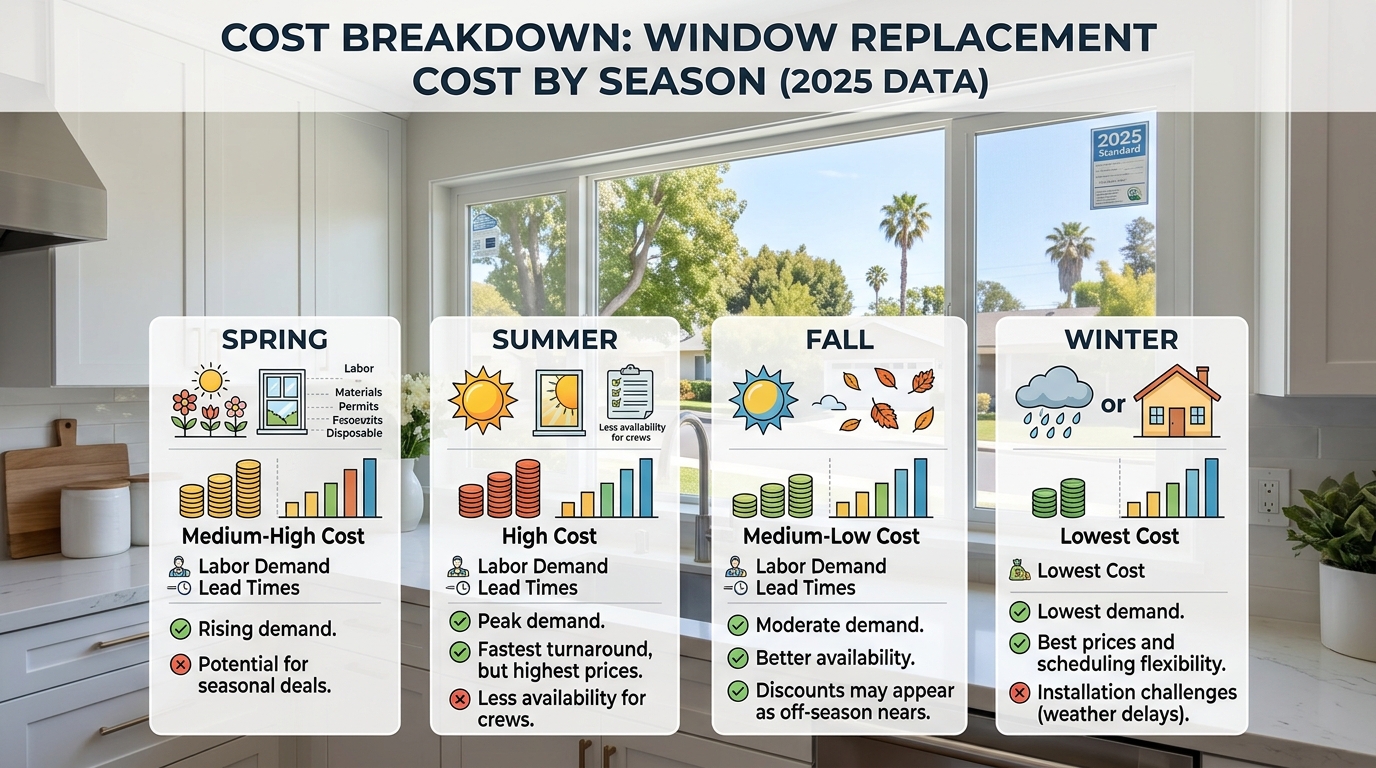
Window replacement pricing in Southern California shifts with contractor demand. The table below shows estimated per-window ranges for mid-range vinyl or fiberglass units, installed. Actual quotes vary by home, product, and contractor.
| Season | Est. Cost Per Window | Contractor Availability | Typical Wait Time |
|---|---|---|---|
| Spring (Mar–May) | $650–$1,100 | Moderate | 2–4 weeks |
| Summer (Jun–Aug) | $700–$1,200 | Low (peak demand) | 4–8 weeks |
| Fall (Sep–Nov) | $550–$950 | High | 1–3 weeks |
| Winter (Dec–Feb) | $500–$900 | High (off-peak) | 1–2 weeks |
Fall and winter projects often cost less than summer because contractors offer off-season discounts to fill their schedules. Based on the ranges above, a 12-window home could see a difference of roughly $1,800–$3,000 between a summer project and a fall project of the same scope.
Incentives: The federal 25C tax credit for energy-efficient windows ended on December 31, 2025, so windows installed in 2026 don't qualify. Check with your utility (such as SCE, SDG&E, or LADWP) for any current local rebates, since programs change often.
Brand-Specific Pricing Factors
Costs vary by manufacturer. Entry-level vinyl windows from regional suppliers often start around $400–$600 per unit, while premium brands like Andersen, Milgard, and Pella can run $800–$1,500 per window depending on glass type and frame material. Fiberglass and wood-clad options usually sit at the top of that range, while standard double-hung vinyl units from the same brands fall closer to the middle. When comparing quotes, confirm whether the price includes a Title 24-compliant Low-E glass package, since some contractors quote base pricing and list glass upgrades separately.
Expected Benefits & ROI Analysis
Window upgrades deliver more than looks. Here's what homeowners can realistically expect.
Energy Efficiency Gains
According to ENERGY STAR, replacing single-pane windows with ENERGY STAR certified windows lowers household energy bills by an average of up to 13% nationwide. In Southern California, that mainly means lower air conditioning costs in summer and less heating on cooler nights. Homeowners in inland valleys, where summer temperatures often top 95°F, tend to see the biggest cooling savings. Coastal homeowners usually see smaller but still noticeable savings.
Home Value Improvement
According to the Remodeling 2025 Cost vs. Value Report, vinyl window replacement recoups about 75.5% of its cost at resale nationally, and wood window replacement recoups about 70%. New windows also improve comfort by reducing drafts and outside noise, which is especially helpful during Santa Ana wind events, when dust and temperature swings increase. Buyers also tend to see updated windows as one less maintenance cost to worry about.
Timeline Expectations
How long does window installation take in California? Most homes with 10–15 windows take 1–3 days to install. The full timeline, including permits, ordering, and scheduling, usually runs 4–8 weeks depending on the season. Custom sizes or specialty shapes (arched, bay, or picture windows) can add 2–4 weeks of manufacturing time, so homeowners with non-standard openings should plan ahead if they want installation done before the holidays.
Who Should (and Shouldn't) Invest in Window Replacement
Good Candidates
- Homeowners with single-pane windows and high energy bills
- Those planning renovations around fall for cost savings
- Sellers preparing homes for market
- Residents in wildfire-prone or high-wind areas who want better sealing against Santa Ana winds
For example, a homeowner in a 1970s home with original single-pane aluminum windows will likely see both a noticeable drop in summer cooling costs and a boost in buyer appeal, making fall replacement a strong choice.
Poor Candidates (Consider Waiting)
- Homeowners who still need HOA approval and face a long review process
- Those without the budget flexibility to handle unexpected costs
- Properties that need major structural work beyond standard window installation
In HOA communities, architectural review can take several weeks, so homeowners should submit applications in July or August to avoid missing fall installation slots.
Alternatives to Consider
Partial Replacement
Instead of replacing every window at once, homeowners can phase the project over multiple seasons to spread out costs while still catching off-season pricing. A common approach is to start with south- and west-facing windows, since they get the most direct sun and drive the biggest cooling savings.
DIY Installation
Skilled homeowners can install vinyl windows themselves and save on labor. However, DIY installation can risk Title 24 non-compliance and may void manufacturer warranties, and a permit is still typically required. DIY is generally only advisable for simple, same-size retrofits in single-story homes. Second-story installations and structural changes carry safety risks and code requirements that are best handled by licensed window replacement contractors.
Seasonal Comparison: Spring vs. Fall
Spring and fall both offer mild weather, but fall usually has better contractor availability and lower prices. Spring demand rises as homeowners prepare for summer, and late-season storms in February and March can still cause delays. Fall projects usually wrap up before the rainy season picks up in December.
For homeowners seeking expert guidance on best time to replace windows California, consulting with licensed professionals early in the planning process helps align project timing with budget and weather conditions.
Final Verdict: Is Window Replacement Worth It This Fall?
Yes. Window replacement is worth it in Southern California, especially when scheduled in fall (September–November) or winter (December–February). These seasons avoid peak summer demand, often come with lower pricing, and offer mild weather for proper sealant curing.
Key Scheduling Recommendations
- Request quotes from multiple contractors in August for fall installation slots
- Verify the contractor's license with the California Contractors State License Board (CSLB) before signing
- Confirm Title 24 compliance and any local utility rebates upfront
- Schedule installation before the rainy season (typically December–March)
- Avoid scheduling during Santa Ana wind events, which are most common from fall through winter and can complicate installation and curing
Homeowners focused on cost savings and availability should target fall or winter. Those who need a faster turnaround can still proceed in spring or summer, knowing prices are often higher. Whatever the season, getting at least three itemized quotes and confirming Title 24 compliance in writing is the best way to avoid surprises and ensure a smooth installation.