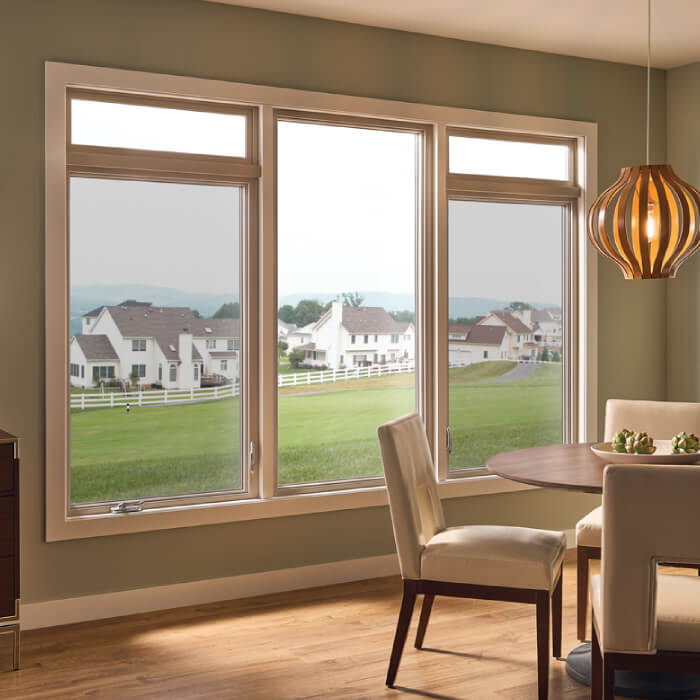
You have two minutes to escape a fire. If your window isn't an egress window, you may not escape at all. Imagine waking up to a room filled with smoke — your door is blocked and you have to go out the window. Is it big enough? We're here to talk about egress today. It's not just California code. It's a lifesaver.
Welcome to Stay Glassy, Episode 9. I'm Maria and I'm Duncan. We're your go-to pros from Newman Windows and Doors and Newman Garage Doors, here to help you make smart, stylish, and safe choices for your home.
Glazed and Confused: Homeowner Q&A
Q: Do all bedrooms really need an egress window?
They really do. Every bedroom and sleeping area must have an escape route directly to the outside — either through a door or through a window that qualifies as an egress window. This applies to every sleeping area in the home.
Q: I have a home office. Does it need an egress window?
Yes. Many homeowners convert a bedroom into a home office and assume the egress requirement goes away. It does not. If the room has a closet and is listed as a bedroom on the home's plans, it is legally considered a bedroom regardless of how you use it — even if you've removed the interior door or changed the layout. The egress requirement stays.
Q: Are there specific building codes that require egress windows?
Yes. Every US state adopts the International Residential Code (IRC), specifically Section R310, which governs emergency escape and rescue openings. In California, this falls under Title 24, which covers energy code, egress, tempered glass requirements, and more. This is why working with a licensed, bonded, and insured window and door specialist matters — they know what your specific area requires.
Section 1: It's the Law
Every US state adopts the International Residential Code or a state-specific equivalent — in California, Title 24. These codes govern exactly what is required for egress from any sleeping area, whether through a door or a window. A room without a compliant egress opening is not legally a bedroom. Non-compliance can affect property values, homeowner's insurance, and the legal status of rental properties.
Section 2: The Right Size Can Save Lives
Egress compliance is measured by the clear daylight opening — the part of the window you can actually get through when it's fully open, not the overall window frame size. All of the following must be met simultaneously:
- Minimum opening width: 20 inches (measured when fully open)
- Minimum opening height: 24 inches (measured when fully open)
- Minimum combined opening area: 5.7 square feet
- Maximum sill height from floor: 44 inches
Meeting three of the four criteria is not enough. A window that starts 60 inches off the ground fails egress even if it's otherwise large enough. The opening must be accessible and large enough for an occupant to get out and a first responder in full gear to get in.
Section 3: Pitfalls
Wrong opening size: A large overall window can still fail egress if the operable section is too small. A 6-foot-wide window divided into three panels — such as an XOX configuration — may have no single operable section that meets the 20-inch width minimum. It's the opening that counts, not the total window.
Window too high: Even a properly sized window fails if the sill starts more than 44 inches from the floor. If the opening begins at 60 or 65 inches, most occupants won't be able to reach it in an emergency.
Furniture blocking access: Permanently placing furniture in front of a bedroom window creates a dangerous barrier. In a fire, you may have only seconds. If you need to move furniture before you can reach the window, that's a serious problem. A bed positioned under a window may actually help — but anything that blocks rapid access does not.
Wrong window style: Awning windows that open less than 30 degrees typically cannot achieve the required clear opening dimensions. Always verify that the window style you choose is physically capable of meeting all four egress criteria.
Section 4: Window Styles and Egress
Horizontal slider — can meet egress: When the operable panel opens to at least 20 inches wide and the window meets all other criteria, a horizontal slider qualifies. The same style window can fail if the panel is too narrow or the window sits too high. The opening is what matters, not the overall frame size.
Single-hung windows — can meet egress: Single-hung windows can comply when sized correctly. The measurement is the clear daylight opening when the sash is fully raised, not the frame dimensions.
Casement windows — can meet egress: Casement windows are excellent egress candidates and are favored by architects. One important detail: many modern casements pivot from 3–4 inches inside the frame rather than the corner. This reduces the clear opening slightly. Always measure the actual daylight opening — and if you're close on size, specify a corner-hinged casement to maximize the compliant opening.
Picture windows — never meet egress: Picture windows do not open. They cannot meet egress under any circumstances. Never install a picture window as the sole window in a bedroom unless another compliant egress opening exists in that room.
Safety with Savvy
This episode's safety segment featured a video of someone attempting to climb out of a window that clearly did not meet egress requirements — too small, too high off the ground, and impossible to exit safely. The clip illustrated exactly why the specs exist: even a determined adult couldn't get through, and a first responder in gear would have no chance. Every single egress criteria existed for a reason that was visible in that video.
Key Takeaway
Egress windows aren't just a checkbox on a building inspection. They are a critical part of your home's safety — for you, your family, your pets, and any first responders who may need to reach you. If you're replacing windows in any sleeping area, work with a specialist who knows the requirements for your specific location and can confirm compliance before the job is done.
Next episode (Episode 10): DIY vs. professional window and door installation — the real pros, cons, and hidden costs. Visit newmanwindows.com/stay-glassy to submit your questions.